Rotary friction welding offers the best possible bond for hydraulic piston rods and cylinder applications, and consequently, has been widely adopted by the world’s leading OEM’s and cylinder manufacturing companies for this safety critical application. Manufacturers rely on rotary friction welding machines to make rods of machine-controlled quality at faster weld cycles. It’s also a greener process that doesn’t result in smoke, fumes, or gases.
Beyond those benefits, friction welding technology has shown that it can solve more manufacturers’ operational challenges, including rod-eye misalignments, extended pre- and post-welding processes, and overly wide tolerances. These erroneous qualities increase manufacturing costs and waste, lowering the bottom line.
Recognizing these concerns, the manufacturers consulted with MTI to engineer enhanced manufacturing processes with minimized human errors. In response, MTI implemented innovative friction welding solutions across three newly developed rotary friction welding machines to optimize hydraulic cylinder rod production.
At MTI, our Sales and Engineering teams worked closely with customers to develop innovative, customer-driven solutions that exceeded these initial requests. By leveraging our friction welding expertise, precision engineering, and advanced machine capabilities, we have designed a next-generation rotary friction welding machine that redefines efficiency and performance in cylinder rod manufacturing.
The following section details how MTI’s friction welding technology sets new industry standards.
Advanced Features & Benefits of Cylinder Rod Rotary Friction Welding Machine
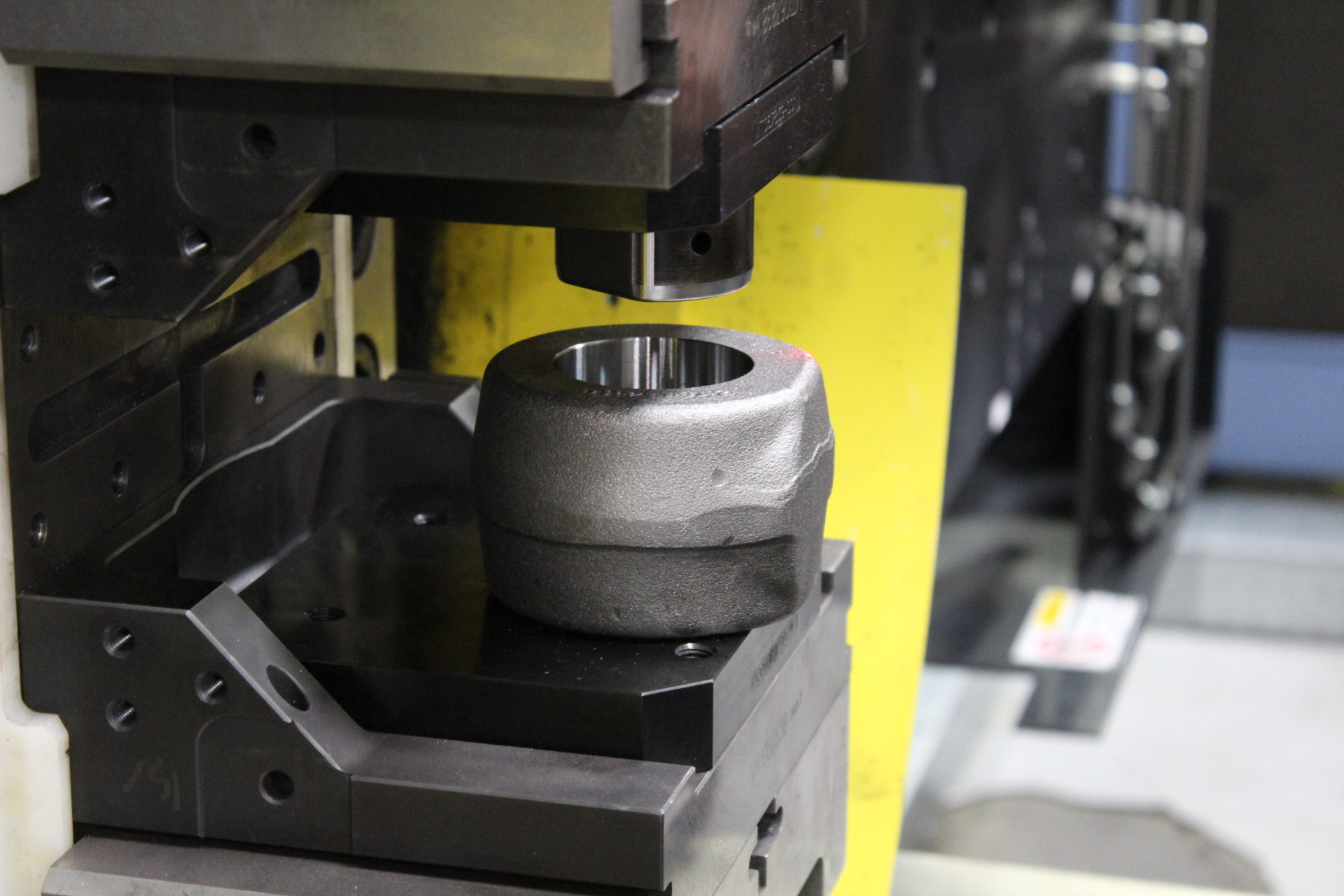
Fulfilling one of our clients’ improvement requests, MTI has developed Quick Change Tooling. This feature streamlines production by reducing tooling change time to less than five minutes. This breakthrough is advantageous for manufacturers with smaller lot sizes that require frequent changeover. Fixture tooling is designed to be non-marking for pre-chromed rods to preserve surface integrity during clamping and welding.
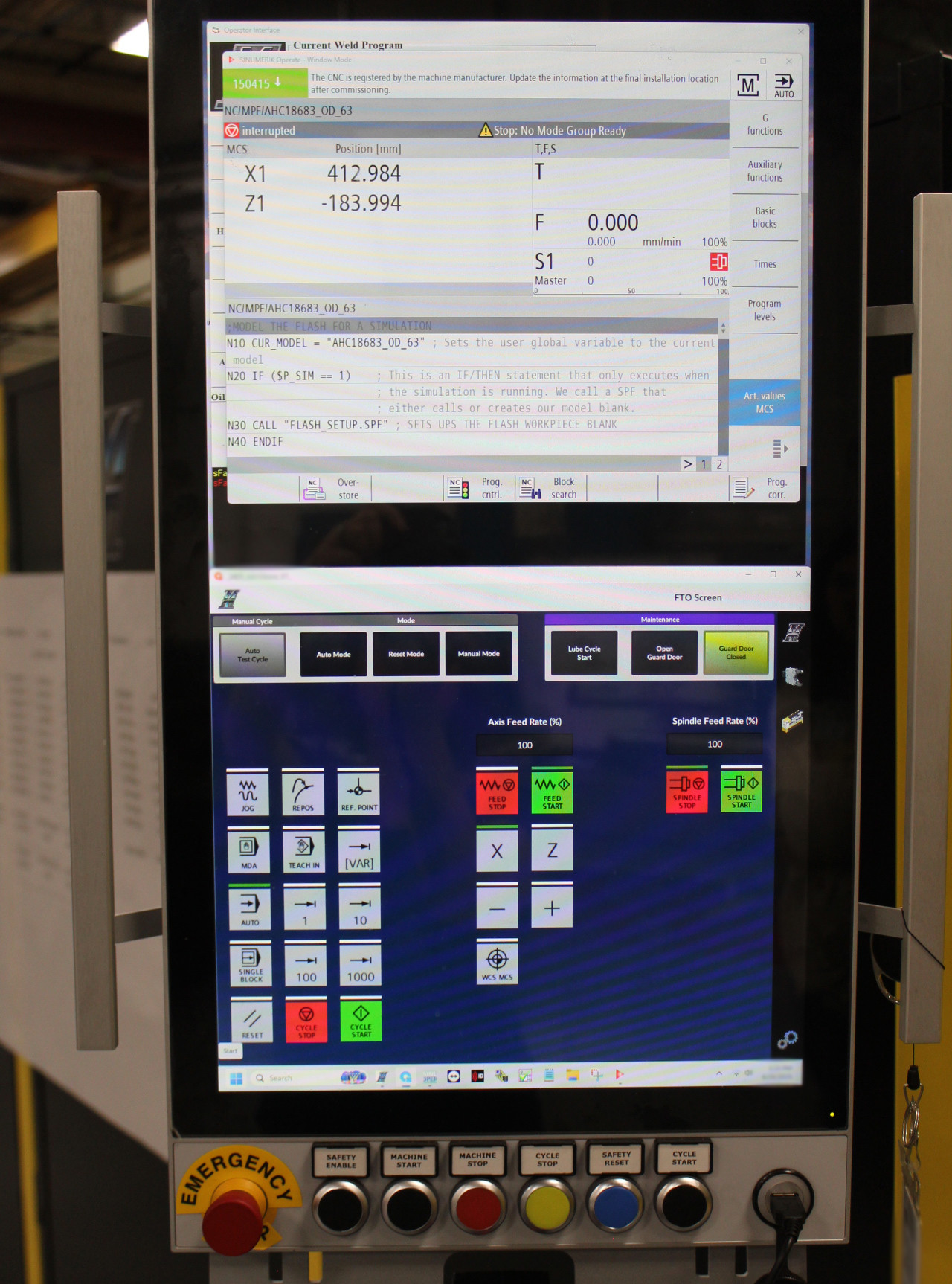
The flash resulting from friction welding is excess, extruded material that in some applications needs to be removed. The flash is more difficult to remove when it cools down and can cause excessive wear and tear on tools. The robust 2-axis CNC-controlled flash turning improves the finished part quality. It is fully integrated with Siemens Sinumerik systems and industry-standard G-code programming to reduce training time and improve efficiency.
The HMI-integrated split screen allows for both the welder and CNC programs to be monitored in real time. This advanced feature reduces the risks of crashes, collisions, and scrapped parts, especially during post-welding processes. An on-screen simulation tests the tool path of the FTO program before an operation, ensuring precision and efficiency of flash removal.